Begin with where and when water appears
Write down the room, the side of the chimney, and the weather associated with the leak. A mark on the uphill side of a chimney chase can lead to a different investigation from water appearing near the fireplace opening. Include whether the chimney is exposed in the attic and whether the stain grows during rain, snowmelt, or dry-weather indoor use.
Photograph the whole room before taking close views. Then photograph the chimney from the ground if it is visible safely. Avoid climbing onto the roof or opening chimney components yourself. A contractor needs the original observations, including uncertainty. “The stain appears after wind-driven rain” is useful evidence. “The counterflashing is bad” is a conclusion that may or may not be supported by the eventual inspection.
Understand the two assemblies meeting at the roof
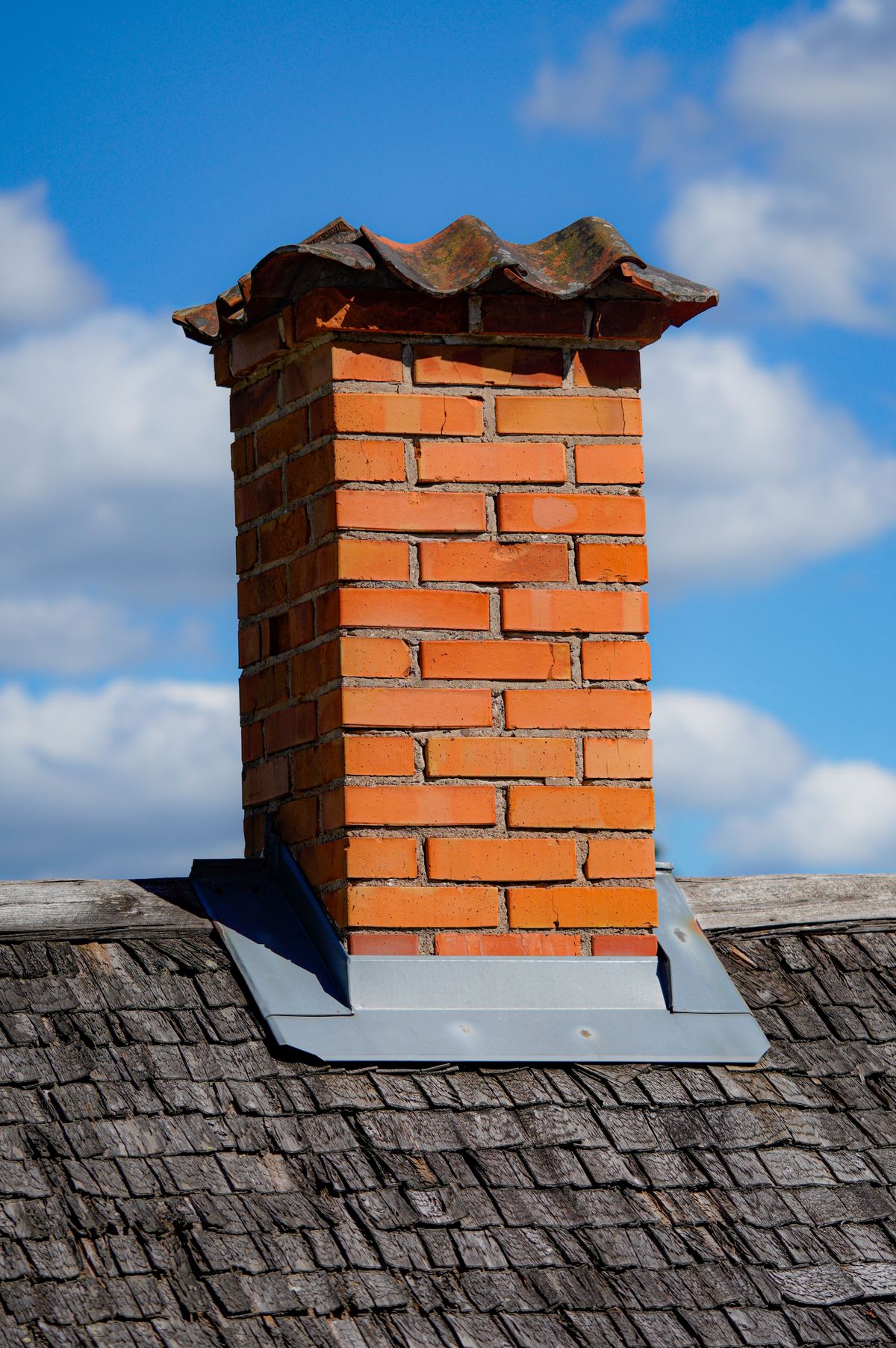
The roof and chimney are different assemblies with different jobs. The roof covering sheds water down a slope. The chimney extends through that drainage surface and has its own exposed masonry, joints, cap or cover, and other components. The connection must manage water while accommodating the fact that the materials and their joints are not one continuous surface.
That is why a chimney leak can involve more than the visible strip of metal at the base. Water may arrive from above the roof intersection or enter at the intersection itself. Ask the inspector to distinguish those possibilities. A roof repair scope can address the roofing connection while leaving a masonry problem unresolved, and a masonry treatment can leave a defective roof connection exactly as it was.
Learn what step flashing is meant to do
Along the side of a chimney on a shingle roof, individual flashing pieces may be integrated with successive shingle courses. The purpose is to direct water outward onto the roof covering as it moves down the intersection. The actual dimensions, materials, and installation requirements depend on the roof system.
You do not need to count pieces from a ladder. Ask the roofer whether the side connection can be inspected, whether it will be replaced, and what surrounding shingles must be disturbed. IKO's flashing overview illustrates the vocabulary. Treat it as background rather than an installation specification for your house. The repair proposal should name the actual detail and explain how the new work connects with the existing roof.
Counterflashing has a separate responsibility
Counterflashing protects the upper edge of the underlying flashing where the roof meets the chimney. It is associated with the chimney side of the connection rather than simply being another shingle accessory. A proposal that replaces roof-side flashing should say whether existing counterflashing will remain and how it will be assessed.
Ask how the upper termination is secured and protected from water. Do not judge the whole connection by whether a visible bead of sealant looks fresh. Sealant may serve a legitimate role in a specified detail, but its appearance does not establish what is happening behind it. If the roofer plans to retain a component, ask why it is serviceable and how the retained part will integrate with the replacement work.
The uphill side deserves its own inspection
Water traveling down the roof meets the uphill face of a chimney before it reaches the sides. Debris can collect there, and the drainage detail may be difficult to see from the yard. Ask for a location-specific photograph rather than accepting a general statement that the chimney was checked.
Some assemblies use a saddle or cricket to help divert water around an obstruction. Whether one is required or appropriate depends on the geometry and applicable requirements. Ask the contractor what governs that decision for the actual chimney. Avoid a universal rule based on a distant photograph or a neighbor's roof. The useful explanation shows where water arrives, how it splits around the chimney, and how it returns to the roof surface without becoming trapped at a vulnerable joint.
Masonry can change the diagnosis
Cracked mortar, damaged brick, and other masonry conditions deserve attention when water appears around a chimney. The roof flashing may not be the only suspect. Ask whether the inspection includes the visible chimney body and whether a qualified chimney or masonry professional should assess conditions beyond the roofer's scope.
For example, a proposal may replace base flashing but exclude repair of deteriorated masonry above it. That is not automatically an unreasonable exclusion, but it must be clear. You should know whether the contractor expects the roof work alone to address the reported leak or whether another task is necessary. Avoid paying for sequential guesses where each trade assumes someone else has ruled out the other water routes.
Check the top without assuming every cap is the same
The top of a chimney may contain components with different functions, and the term “cap” is often used loosely in conversation. Ask the inspecting professional to identify the part in question and explain the observed defect. A chimney cover problem is not necessarily a roof flashing problem.
Do not remove covers, climb the chimney, or attempt to test a flue as part of a leak investigation. If the chimney is used for a fireplace or appliance, changes to it can involve combustion and venting considerations that belong with qualified professionals. The scope should identify the responsible trade. A contractor who clearly says which component needs another specialist is giving you more useful information than one who describes every chimney issue as a roofing sealant job.
Repeated patches can hide the original detail
A thick coating around the base may make it difficult to inspect the metal and joints underneath. It can also conceal several generations of repair. Ask whether the proposed work includes exposing and evaluating the underlying condition, and how removal of old patch material will affect surrounding shingles or masonry.
The presence of patching does not establish that the chimney is beyond repair. It means the inspection may have limits until material is removed. Request a written account of those limits and a plan for what happens next. If a quote is based on a visual inspection only, it should say so. A fixed-price surface treatment and a reconstruction of the connection are different projects even when both are described casually as “resealing the chimney.”
Distinguish a wet stain from an old stain
Masonry and interior finishes can retain visible discoloration after an entry point has been repaired. Record whether the area is actively wet, grows after weather, or simply remains marked. The condition may need evaluation with appropriate tools and access, rather than a judgment based on color alone.
Suppose a stain remains the same size through several storms after repair. That is different evidence from a stain that expands with each rain. Keep the same camera angle and date your observations. Do not immediately cover the reference with paint if it is still being used to evaluate the result. Discuss interior drying and restoration separately from the exterior repair so that a successful roof connection is not confused with an unfinished indoor moisture problem.
Ask what a controlled test would establish
If the source remains uncertain, the professionals may propose a controlled water test or additional inspection. Ask what route they intend to isolate and how they will observe the interior. Testing should be designed to answer a question, not simply wet all nearby surfaces at once.
Also ask what a negative result means. A leak that needs a particular wind direction or a period of snowmelt may not reproduce during a short test. The written findings should state the conditions and any remaining uncertainty. Do not perform a hose test from a ladder yourself. Water application can create risks and can produce misleading results if it forces water into a detail in a way that normal weather does not.
Make the repair scope name the parts
The proposal should identify roof-side flashing, chimney-side counterflashing, surrounding covering, and any masonry or top-of-chimney work included. It should also explain which components remain. Ask what materials will be used, what requires removal, and whether hidden deterioration is covered by the base price.
A useful comparison might show one proposal rebuilding the connection while another applies a temporary surface treatment. That difference should be visible before you compare totals. Ask about the expected maintenance and limitations of each option. The IKO installation guide is a reference for discussing flashing types, but the project documents should provide the property-specific scope rather than copying a general detail without checking the assembly.
Coordinate roof replacement and chimney work
If you are planning a new roof, resolve chimney defects before treating the replacement as a complete answer to existing leaks. Ask whether the chimney needs work that would disturb the new covering later. A masonry repair scheduled after roofing may affect access, debris protection, or flashing responsibility.
Ask who coordinates the sequence and who inspects the final connection. Keep each trade's work boundary in writing. If one contractor supplies counterflashing and another integrates roof-side flashing, the handoff deserves a specific plan. For a Goshen homeowner managing work around an older chimney, that coordination can be more important than choosing a particular metal finish. The water path must work across both scopes when the separate crews have left.
Request evidence of the concealed work
Before the connection is covered, ask for photographs showing the relevant stages. You are looking for a record of what was installed and where, not a dramatic before-and-after image for social media. The final photograph should be accompanied by the scope and materials so it can be interpreted later.
Keep the chimney inspection findings with the roofing records. If another professional ruled out or repaired a masonry condition, save that documentation too. A later stain is easier to investigate when everyone can see which routes were assessed. Without those records, the next contractor may have to reopen the same question from the beginning, with no way to distinguish original work from earlier patches.
Use the next storm as an observation, not a victory lap
Ask how to report recurring moisture and what follow-up is included. Continue the weather log using the same room description and photograph angles. If water returns, report whether the timing, location, or amount changed. A changed symptom can help narrow an unresolved route.
The goal is a clear chain from observed water to diagnosed entry, defined repair, and documented follow-up. That chain is especially useful at a chimney because several trades and several water routes can overlap in one small area. You do not need to become a flashing installer to manage the work well. You need the contractor to explain which part failed, how the repair changes the drainage path, and what evidence will be used to judge the result.